
The Drift Log · Model independence and repeatable builds
Capturing Build-Time Environment to Freeze Artifact Output
23 November 2026 · 3 min read · 631 words · established
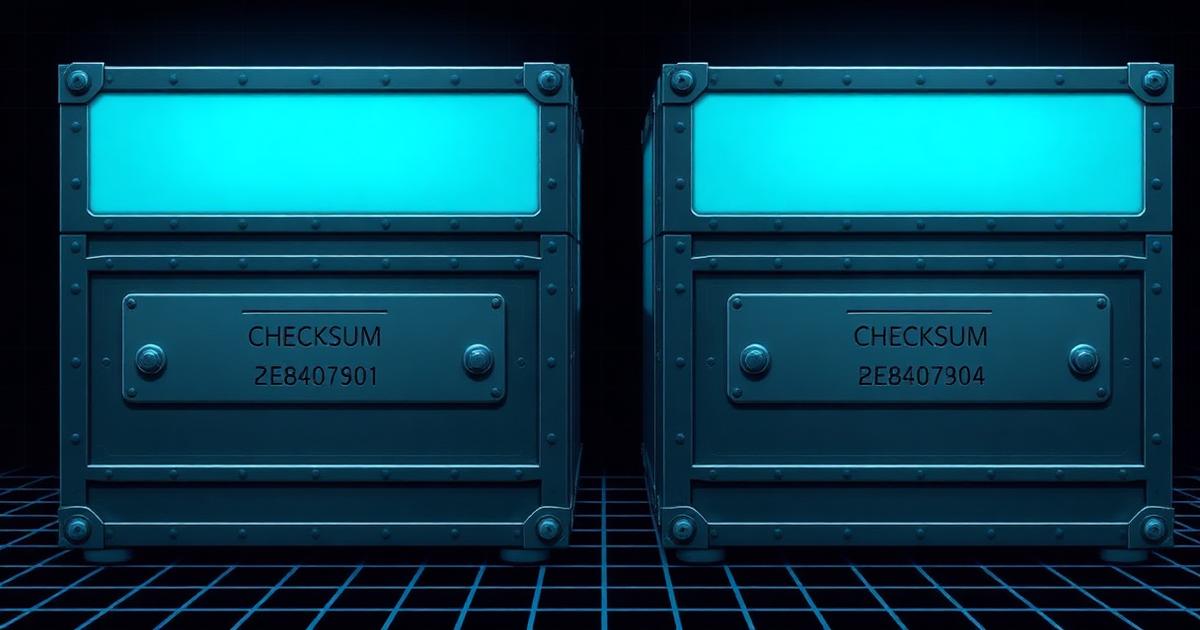
Scrub ambient host variables with an allowlist and record environment manifests to guarantee byte-for-byte repeatable build artifacts.
You checkout commit a8f3c1 from six months ago. The repository state is identical. The lockfile is frozen. You run the build script, and the output binary has a different SHA-256 checksum than the archive released to production.
When you diff the decompiled binaries, you find differences in debug symbols, embedded strings, or compiler optimization passes. The source code did not change. The dependency tree did not change. The host machine did.
A compiler does not read source files in isolation. It executes inside an operating system process, and that process inherits an environment. If your build pipeline does not isolate and capture that environment, your build is not sealed.
What Environment Leaks into Your Binary
Compilers, packagers, and linkers routinely query ambient environment variables. When these variables vary between CI agents, local developer laptops, or baseline OS updates, they break byte-for-byte equivalence.
Common sources of environment drift include:
- Path references: Variables like
HOME,PWD, andTMPDIRoften get embedded directly into debug symbols (.DWARFor.PDBtables) and source maps. - Toolchain flags: Ambient variables like
CFLAGS,CXXFLAGS,NODE_OPTIONS, orRUSTFLAGSsilently alter optimization levels, inlining thresholds, and memory limits. - Host details: Default settings for
USER,LOGNAME,HOSTNAME, orSHELLleak into version strings and generated headers. - Locale and collation:
LANGandLC_ALLdictate sorting order during file globbing, changing the link order of object files. (We covered this failure mode in Fixing Locale Drift in Build Scripts).
When these inputs are unmanaged, achieving a reproducible artifact is impossible. You are building against an invisible host profile rather than a declared specification.
Sanitizing and Locking the Build Environment
A repeatable build requires two explicit steps: scrubbing the ambient environment to a strict allowlist before execution, and writing an exact record of those inputs alongside the binary.
Relying on developers or CI runners to maintain a clean shell is a mistake. The build script itself must drop unapproved variables using env -i or containerized isolation.
A minimal POSIX wrapper demonstrates the posture:
#!/bin/sh
set -eu

## Allowlist only the strictly required variables
ALLOWED_VARS="PATH SOURCE_DATE_EPOCH LC_ALL CC CXX"

## Construct a clean invocation
CLEAN_ENV="LC_ALL=C"
for var in $ALLOWED_VARS; do
    eval "val=\${$var:-}"
    if [ -n "$val" ]; then
        CLEAN_ENV="$CLEAN_ENV $var=$val"
    fi
done

## Run the build in an isolated environment
exec env -i $CLEAN_ENV ./scripts/compile.sh
By scrubbing inherited state, you remove ambient noise like runner-specific tokens, personal home directories, and disparate system defaults.
Recording the Environment Manifest
Scrubbing the environment prevents accidental variation. Capturing it ensures that future audits can reconstruct the exact execution boundary.
An effective env capture process writes an unprivileged manifest alongside the build output. This manifest records the effective variables used during compilation, excluding secret material:
{
  "build_environment": {
    "CC": "clang-16",
    "CXX": "clang++-16",
    "LC_ALL": "C",
    "PATH": "/usr/local/bin:/usr/bin:/bin",
    "SOURCE_DATE_EPOCH": "1704067200"
  },
  "host": {
    "arch": "x86_64",
    "kernel": "Linux 6.1.0"
  }
}
If an output diverges between two agents, diffing their environment manifests instantly isolates which variable leaked into the toolchain.
How SHPBL Handles Repeatability
At SHPBL, software capability is computed rather than generated. Our library code contains no runtime AI models and zero hallucination surface. We treat byte-for-byte reproducibility as a concrete engineering requirement.
Every release archive across our catalog is model-independent and validated by our certification harness. To ensure that consumers can verify every artifact from source, we seal release archives against published checksums documented in our root of trust. The execution environment is pinned and measured, eliminating host variance from the final artifact.
What to Implement on Monday
Take one build step in your CI pipeline and audit its environment exposure.
- Wrap your compile entry point with
env -i. Define an explicit allowlist of required keys (PATH,LC_ALL=C,CC,SOURCE_DATE_EPOCH). Reject everything else. - Standardize paths. Pass flags to your compiler that strip local directory prefixes, such as
-fdebug-prefix-mapin GCC/Clang or--remap-path-prefixin rustc. - Persist the manifest. Output the sanitized build environment as a build artifact. When two CI workers produce different checksums for the same commit, diff their manifests before touching the source code.
This post supports the longer argument in Model Independence and Repeatable Software Builds.
Keep reading
Next in the log
- Model Independence and Repeatable Software Builds
Runtime model variance and non-reproducible builds compound to break production systems. Here is how to isolate probabilistic logic and pin artifacts.
- Deterministic Ordering of JSON Keys for Stable Snapshots
Flaky CI snapshot diffs caused by nondeterministic JSON key order can be eliminated with SHPBL’s certified, repeatable canonicalisation routine.
- Fixing Locale Drift in Build Scripts
Locale inheritance causes checksum drift in build scripts; pin LC_ALL=C to ensure byte-identical outputs across environments.
The Strategic Master Library · written and reviewed under the house's own epistemic rules: nothing claimed that we cannot show.